Home renovation
Renovating, extending or rebuilding a Cyprus house — the options compared
Renovate, extend, or demolish and rebuild? How the options compare on cost, permits and timeline for Cypriot houses, and which one suits which property.
8 min read
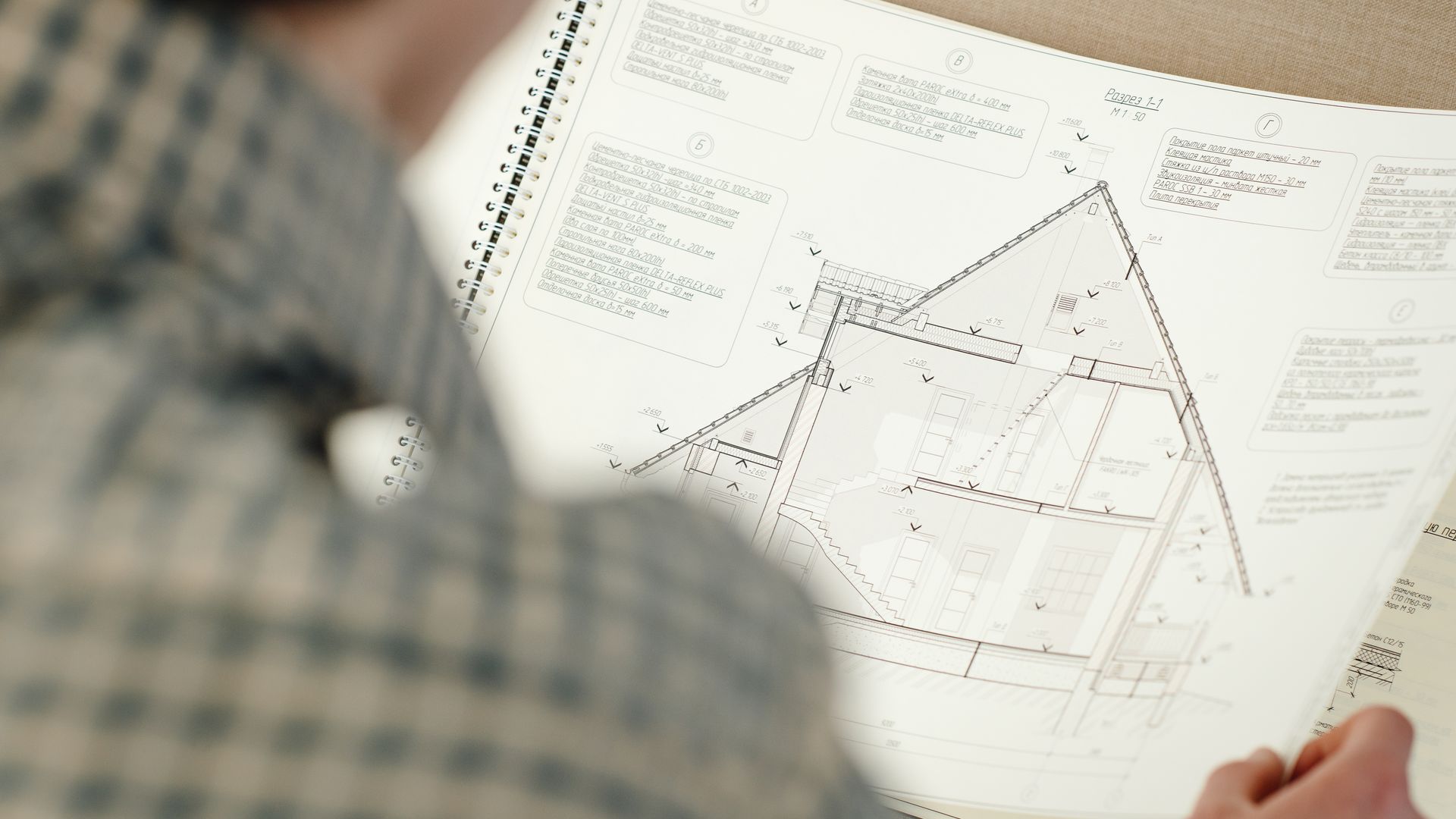
Stavros covers the rooms that carry the most cost per square metre and the finishes that go into them. He tracks the order trades have to arrive in, which moves a Cypriot renovation bill further than any hourly rate does.
Published
For most older Cypriot houses, renovating the existing shell costs less than demolishing it and starting again — until the work touches structure, services and the external envelope at the same time. At that point the two options converge, and the rebuild buys something the renovation cannot: a current thermal envelope, a clean permit history and a fresh set of guarantees. The decision is therefore not really about taste. It is about how many of those three systems a property needs replaced at once.
The options
There are four routes an owner realistically chooses between, plus a fifth that deserves saying out loud.
Cosmetic refurbishment. Paint, floor coverings, sanitaryware, kitchen fronts, joinery. Nothing behind the plaster is opened. No permit is engaged because nothing structural or external changes. This is the only option with a genuinely predictable price, because there are no unknowns to discover.
Full interior renovation. The shell stays; the services do not. Wiring, pipework, distribution board, waterproofing to wet areas and usually the windows are replaced. Internal non-structural partitions may move. Cost stops being a function of floor area and becomes a function of how many trades depend on each other's sequencing.
Renovation plus extension. The existing house is renovated and floor area is added — a rear room, an enclosed veranda, a first floor over an existing footprint. Added floor area triggers planning permission and a building permit, and it engages the plot's building coefficient and coverage ratio, which may or may not have headroom left.
Demolition and new build on the same plot. The plot is retained, the building is not. Everything is designed to current thermal and structural regulation. Permit exposure is at its maximum and so is the time before anyone can move in.
Sell and buy. For a property whose location is the problem rather than its condition — a hillside plot in Peyia where access roads limit crane and delivery vehicle size, or a unit with an unresolved separate title — no amount of renovation improves the underlying position.
Side-by-side comparison
The published ranges for the middle two options sit in the renovation price guide and the extension price guide, and both are shown with the basis behind them and their date rather than written into this page.
| Work | Indicative range | Midpoint | Published sources |
|---|---|---|---|
| Home renovationFull internal renovation of an existing home or apartment, per m² of floor area: demolition and waste removal, electrical and plumbing upgrade, flooring and tiling, painting, kitchen and bathroom replacement. Low end is a cosmetic refresh with no wall or service changes; high end is a premium fit-out with custom joinery. Excludes VAT, structural extension and furniture. | €300–€1,400per m² | €700 |
Indicative range compiled from published sources, not a quote. It shows the level those sources report for this kind of work, not what your job costs. Only a site visit and a written quote for your actual scope produce a real figure. Sources compiled 2026-08-02.
| Cosmetic | Full renovation | Renovation + extension | Demolish and rebuild | |
|---|---|---|---|---|
| Permit engaged | None | Only if structure or envelope changes | Planning permission and building permit | Planning permission, building permit, demolition |
| Price predictability | High | Low until walls and floors are opened | Low on the old part, high on the new | High once drawings are fixed |
| What sets the timeline | Trade availability | Sequencing between trades | The permit, not the build | The permit, then the build |
| Thermal outcome | Unchanged | Improved only where the envelope is touched | Mixed: new part performs, old part does not | Current regulation throughout |
| Occupation during works | Usually possible | Rarely practical | Rarely practical | No |
| Where it stops making sense | Services are at end of life | Structure, services and envelope all need work | Coefficient or coverage is exhausted | Plot value does not support it |
The practical difference between the columns is less about euros than about which of them contains an unknown. A cosmetic job priced from a written scope lands close to its quote. A full renovation on a house whose slab has never been opened is priced on an assumption, and the assumption is tested as soon as the floor comes up.
One further asymmetry is worth naming. Renovation quotes are commonly given before anything is opened, while rebuild quotes follow a set of drawings. That makes the rebuild figure look firm and the renovation figure look attractive, when in reality only one of them has been priced against a defined scope.
Which suits which property
Cyprus building stock divides more usefully by era and exposure than by district boundary.
1970s–1990s apartment blocks
In Strovolos and comparable inland suburbs, the dominant renovation work is rewiring and replumbing rather than layout. In a block, demolition is not an option and extension is constrained by the shared structure and the management committee, so full interior renovation is effectively the only route with any depth to it. Budget for the distribution board and the electrical certificate from the start; they are the line items most often left out of an initial quote.
Stone and block village houses
Thick walls, small openings, no cavity, and frequently a roof that was re-covered rather than rebuilt. These respond well to renovation because the structure is usually sound and the envelope is already thermally massive. What they do not respond well to is being opened up: removing internal walls in an unreinforced masonry house is a structural engineer's decision, not a builder's.
Coastal properties
Salt-laden air near the Kato Paphos seafront means fixings, external ironmongery and balustrades corrode on a shorter cycle than the same items inland, and marine-grade specification is standard rather than an upgrade. Renovation that renews finishes but reuses the old fixings simply resets a clock that runs fast.
Plots with known ground conditions
Parts of Pissouri have recorded ground movement, which makes a structural survey standard before major work anywhere in the village. Any comparison between renovation and rebuild on such a plot is meaningless until that survey exists, because it determines whether foundations can be reused at all.
Inland houses with high cooling load
Nicosia has the widest temperature range on the island, and that drives insulation and shading rather than heating. Where the deciding factor is running cost, the envelope work — roof insulation, glazing, external shading — is what changes the ten-year picture, and it is precisely the work a cosmetic refurbishment skips.
Cost over ten years
Comparing the options on capital cost alone consistently flatters cosmetic refurbishment and penalises the rebuild. A ten-year view changes the ranking, and it has four components rather than one.
The first is capital: what is paid to contractors, plus design fees, permit fees, and the statutory certificates. The second is running cost, which in Cyprus means cooling far more than heating, and which is set by the envelope — roof insulation, glazing, orientation and shading. A renovation that leaves the roof untouched leaves the largest single running-cost lever untouched with it.
The third is the maintenance cycle, and it is the component owners underestimate most. Coastal render, external timber, balustrades and flat-roof waterproofing all run on shorter cycles near the sea than inland. A rebuild resets every one of those cycles at once; a partial renovation resets some and leaves the rest mid-life, which produces a lumpy expenditure profile through the middle of the decade rather than a quiet one.
The fourth is what the property is worth on exit and how readily it transacts. An energy performance certificate is required when a property is sold or let, so the envelope decision surfaces at sale whether or not it was priced in at the start. So does the title position: the Land Registry record, not the builder's assurance, determines whether a separate title exists for the unit, and work carried out without the permits that should have covered it is a problem discovered by the buyer's lawyer rather than by the owner.
The honest summary is that cosmetic refurbishment wins over a short horizon, full renovation wins over ten years on most sound structures, and the rebuild wins only where the plot is worth more than the building standing on it or where all three systems have failed together. District pages show where local access and contractor availability move those ranges, and the price index carries the underlying figures with their collection dates.
Common questions
Is renovating an old Cyprus house worth it compared with buying newer?
It depends on which of the three systems — structure, services, envelope — is failing. A house needing one of them renovates well. A house needing all three is competing against new stock that already has them, and the comparison should be made on total ten-year cost rather than on purchase price.
Does a full renovation need a building permit?
Replacing finishes and services in place does not. Altering the structure, changing the external envelope, or adding floor area does, and that means planning permission followed by a building permit. The consequence is usually measured in months of programme rather than in construction cost.
Can renovation be done in stages to spread the cost?
Yes, and it is common — but the sequence matters more than the split. Anything buried behind plaster or under a floor screed has to be done before the finishes that cover it. Staging that runs finishes first and services later pays for the same surfaces twice.
How much does the district change the price?
Enough to matter, and for reasons that are structural rather than opportunistic. Contractor availability is tightest where construction activity is highest, travel time is added to day rates on jobs far from the contractor base, and difficult access raises the labour content of every delivery rather than appearing as a separate line.
Renovation contractors in Cyprus
8 companies shown here.
Polart Construction
Strovolos, Nicosia
Polart Construction is an architecture practice in Strovolos, in the Nicosia district. Recorded services include planning submissions, drawings, site supervision.
- Planning and building permits
- Structural engineering
- Interior design
- House extension
- +7 more
Thermodynamics Quality Heating
Strovolos, Nicosia
Thermodynamics Quality Heating is a fireplace business in Strovolos, in the Nicosia district.
- Home renovation
- Bathroom renovation
- Kitchen renovation
P. A. Constructions Ltd.
Engomi, Nicosia
P. A. Constructions Ltd. is an architecture practice in Engomi, in the Nicosia district. Recorded services include planning submissions, drawings, site supervision.
- Planning and building permits
- Structural engineering
- Interior design
- House extension
- +7 more
Grinelion Property Developer
Kiti, Larnaca
Grinelion Property Developer is an estate agent in Kiti, in the Larnaca district.
- General building
- Home renovation
- House extension
- Bathroom renovation
- +2 more
SB Pazzleco
Strovolos, Nicosia
SB Pazzleco is a construction company in Strovolos, in the Nicosia district.
- General building
- Home renovation
- Commercial renovation
- House extension
- +2 more
Fabretti Construction
Nicosia Centre, Nicosia
Fabretti Construction is an architecture practice in Nicosia Centre, in the Nicosia district. Recorded services include planning submissions, drawings, site supervision.
- Planning and building permits
- Structural engineering
- Interior design
- House extension
- +7 more
Stephanos Philippou Developers
Oroklini, Larnaca
Stephanos Philippou Developers is an estate agent in Oroklini, in the Larnaca district.
- General building
- Home renovation
- House extension
- Bathroom renovation
- +2 more
Africanos & Rotiana Developers Ltd.
Larnaca Centre, Larnaca
Africanos & Rotiana Developers Ltd. is a company in Larnaca Centre, in the Larnaca district.
- General building
- Home renovation
- House extension
- Bathroom renovation
- +1 more
Sources
- Department of Town Planning and Housing — planning and building permits — retrieved 2026-07-24
- Statistical Service of Cyprus (CYSTAT) — construction cost indices — retrieved 2026-07-24
- Cyprus Land Registry (Department of Lands and Surveys) — retrieved 2026-07-24
Where to go next
Companies, districts and the rest of the guides on this subject.

Thinking of doing this?Get up to five quotes, free.
Send us the job and we will gather quotes against the same written scope, so the numbers are comparable.