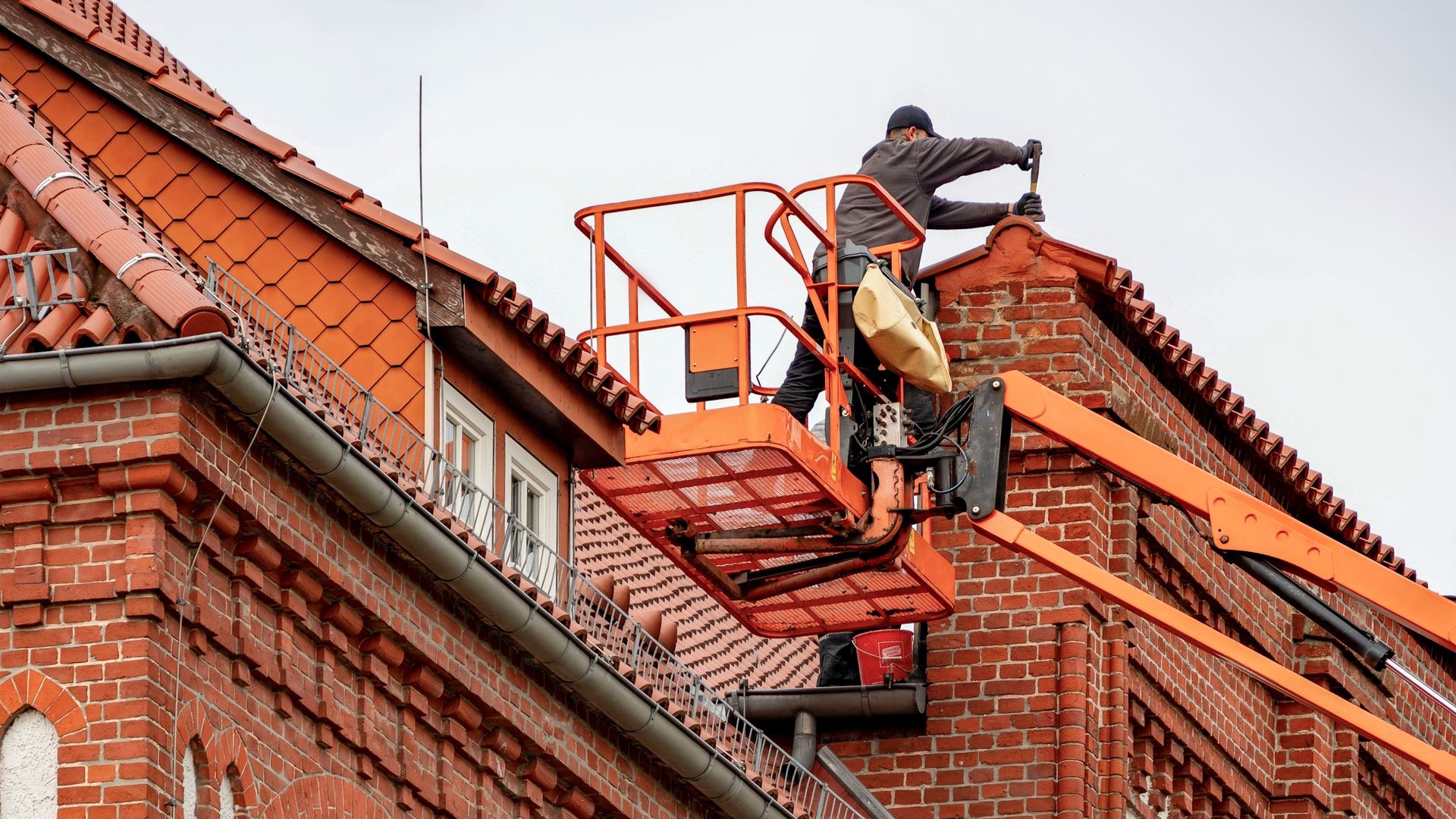
Cyprus · roofing
Roofing in Cyprus.Compare several quotes at once.
Roofing quotes are hard to compare because the firms are frequently answering different questions. One has priced a repair, one a replacement, and one something in between — all from the same leak. Establishing which question is being answered comes before comparing any number.
- Provenance on every range
- Dated, not evergreen
- Method published in full
Roofing companies in Cyprus
- #2PromotedWaterproofed Cyprus
Waterproofing, roofing and damp work across Cyprus, with the membrane system named in the quote.
First establish which question is being answered
The single largest source of incomparable roofing quotes is that the firms have answered different questions.
A homeowner reports a leak. One firm attends, finds a failed detail, and prices repairing it. Another attends, judges the covering to be at the end of its service life, and prices replacing it. A third proposes an overlay. None of them is necessarily wrong, and their totals cannot be ranked against each other because they are not the same product.
So the first step is to fix the question. Either ask every firm to price a specified repair, or ask every firm to price a specified replacement, or ask each to state which they recommend with the evidence for it — and then decide, and re-tender against that decision.
Asking three firms what they would do about a leak produces three proposals and no comparison.
Repair or replace, decided on evidence
The decision turns on three things, and a firm proposing either should be able to speak to all three.
Where the water is entering. Water travels before it appears — along a slab, down a batten, across a ceiling void — so the stain is rarely under the hole. A diagnosis that names an entry point and explains how the water reaches the mark is a diagnosis. One that gestures at the general area is a guess with a price attached.
Whether the failure is local or general. One failed upstand is a repair. A covering that is failing in several unrelated places is saying something about its age and condition, and repairing one spot buys time rather than a solution.
What condition the substrate is in. A sound deck under a failed covering supports a replacement of the covering alone. A deteriorated one changes the job substantially, and it is the item most often discovered after work starts.
Where a firm proposes replacement, the useful question is what evidence rules out repair. Where a firm proposes repair, the useful question is what they expect the remaining service life to be and what happens if another failure appears next winter.
Flat and pitched are different trades
Cypriot roofing covers two quite different things and the pricing structures do not resemble each other.
Flat concrete roofs dominate the housing stock. The work is about the covering, the falls, the drainage and the details, and it is priced mainly by area with details measured separately. The failure modes concentrate at junctions and outlets.
Pitched tile roofs appear on newer villas and on some traditional properties. The work is a system — structure, underlay, battens, tiles, fixings, ridge and hip treatment, valleys, flashings — and the parts that fail are mostly under the tiles rather than the tiles themselves.
A firm that is competent on one is not automatically competent on the other, and a quote covering both should be read as two quotes.
What a tile roof quote should describe
On a pitched roof, the tiles are the visible half. The specification that matters sits beneath them.
Underlay. Type and how it is lapped and dressed into gutters and valleys. This is the second line of defence and the one that carries any water that gets past the tiles.
Battens. Section, treatment and fixing centres set by the tile.
Fixings and wind uplift. Which tiles are mechanically fixed and where. Cypriot roofs take strong wind, particularly on exposed and coastal sites, and perimeter and ridge fixing specifications exist for that reason.
Ridge and hip. Traditionally bedded in mortar, and mortar cracks with thermal movement and lets water in. Dry-fix systems are the alternative. Which is being used is a specification and a price difference, and it is routinely absent from a quote.
Valleys, flashings and abutments. Material and detail where the roof meets a wall, a chimney or another roof plane.
A quote naming a tile and a quantity describes what the roof will look like. A quote naming these five describes how long it will last.
Access, and why it moves the ranking
Getting people, tools and material to roof level is a genuine cost, and it is treated inconsistently between quotes.
Scaffold or another safe access system, edge protection where anybody works near an edge, and the means of lifting material all have to exist. Firms handle them differently: absorbed into the rate, itemised separately, or assumed to be somebody else's arrangement.
Two consequences for comparison. A quote that excludes access can look substantially better than one that includes it, and the difference is not a saving. And where access is being provided anyway, the marginal cost of doing other work from it — insulation, a solar mounting, gutter replacement, facade repair at the eaves — is far below the cost of returning later.
Ask every firm to price access as a separate line, whether or not they normally would. It makes the rest of the comparison possible.
The Cypriot conditions that shorten roof life
Three, and they explain most of what a roofing firm on this island spends its time on.
Ultraviolet and heat. Long, intense exposure degrades coverings faster than in temperate climates, and the daily temperature swing on a dark roof works every joint and lap.
Concentrated rainfall. Water arrives in quantity over short periods, which tests drainage capacity rather than water resistance. A roof that copes with steady rain can be overwhelmed by a storm, and the failure shows at the outlets and the overflow provision.
Salt and wind on the coast. Fixings corrode, and uplift loads on exposed sites are higher than inland. Both are specification questions rather than workmanship ones, and both are invisible in a total.
A firm that raises these unprompted has thought about the specific roof. One that quotes a standard build-up regardless of exposure has quoted a roof, not this roof.
Rainwater goods, and the item that is quoted or not
Gutters, downpipes, outlets and overflows are part of a roof's function and frequently sit outside a roofing quote entirely.
On a pitched roof they are the visible drainage and their absence from a quote is easy to spot. On a flat roof the equivalent items are outlets, their gratings, and the overflow provision that limits how deep water can stand if an outlet blocks. Those are less visible, and their omission is common.
The comparison problem is that a firm including them and a firm excluding them are producing totals that differ for reasons unrelated to the roof covering itself. Since the work is being done from the same access, adding them at the time is far less expensive than a separate visit — which makes their exclusion a deferred cost rather than a saving.
Where a property has had a leak attributed to the roof, blocked or undersized drainage is worth eliminating before a covering is condemned. Water standing above an outlet finds weaknesses that would never have been tested otherwise, and replacing a covering without correcting the drainage reproduces the conditions that failed it.
What happens to the old roof
Removal and disposal appear on some quotes and not others, and on a replacement they are a real quantity.
Stripped covering, old screed where falls are being corrected, and broken tiles are construction waste, which goes to a licensed facility and is charged by volume or weight. A quote silent on disposal has either absorbed it or has not counted it, and which of those is true becomes apparent when the skips arrive.
Two questions settle it. Who removes the arisings, and is the cost inside the figure? And on a tile roof, are any tiles being salvaged for reuse — which is common on older properties where matching replacements are difficult to obtain, and which changes both the strip-out method and its duration.
Salvage is worth raising explicitly. Careful removal is slower and therefore more expensive per square metre, and it can be the only way to keep a roof looking consistent where the original tile is no longer made.
Making the comparison possible
Write the scope, then send it to everybody.
State which question is being answered — repair to a named defect, or replacement of a defined area.
State the roof type, the area and how it was measured.
For a flat roof, list the details separately. For a pitched roof, specify underlay, battens, fixing regime, ridge and hip method, and every abutment.
Require access as a separate line.
Require the assumed substrate condition and a rate for work beyond it.
Ask whether insulation is included, and at what specification.
Require the warranty split into material and workmanship, with durations and exclusions.
Quotes returned against that document can be ranked. Quotes returned against a site visit and a conversation cannot, and the lowest of them is usually the one that assumed the least work — which is a difference that surfaces later rather than an advantage secured now.
Common questions
- Why does one firm say repair and another say replace?
- Because a leak is a symptom and its cause can be read more than one way. A firm that finds a failed detail proposes fixing it. A firm that judges the covering to be near the end of its life proposes replacing it. Both can be honest positions on the same roof, and the way to tell them apart is to ask what evidence each is relying on rather than which total is lower.
- What are the two roof types in Cyprus, and do they compare?
- Flat concrete roofs, which dominate, and pitched tile roofs found on newer villas and on some older properties. They are different trades with different failure modes and different pricing structures, and a firm strong on one is not automatically strong on the other. Quotes for the two are not comparable in any useful sense.
- How much of a roofing quote is access?
- Enough to change the ranking. Scaffold, edge protection and material handling to roof level are a real share of the cost, and firms treat them differently — some inside the rate, some as a separate line, some assumed to be provided by the client. Two quotes can differ mainly because one included the scaffold.
- Should insulation be part of the same job?
- Where the roof is being opened, adding insulation shares the access and the making good with work already happening. That makes the marginal cost far lower than doing it separately later. Whether a quote includes it, and at what specification, is a common source of apparent price difference.
- What is usually missing from a tile roof quote?
- What happens under the tiles. Battens, underlay, ridge and hip bedding and the fixings that resist wind uplift are the parts that fail, and a quote that describes tiles by type and quantity has described the visible half of the work.
- How should a leak be diagnosed before quoting?
- By finding the entry point rather than the appearance point, since water travels along a slab or a batten before it shows. Water testing in sections, inspection at the details and, where necessary, opening a small area are all cheaper than a replacement bought to make a leak stop.
01Reading the numbers
A roofing priceis only as good as its source.
Every range on this page says where it came from and when. This is how to use them.
Check what it is
A range built on forty recorded quotes carries more weight than a level compiled from two published guides. Every range says which of the two it is.
Basis shown
Check the date
Prices move. A figure gathered in January says little about August, so each carries the month it was recorded or compiled.
Dated
Compare the same unit
Per square metre, per room and per job are different measurements. Convert before comparing, not after.
Same unit
Treat outliers as questions
A quote far outside the published range is not automatically wrong — but the difference should have an explanation you can check.
Ask why

Need roofing?One form. Up to five quotes.
Send us the job and we will gather quotes against the same written scope, so the numbers are comparable.