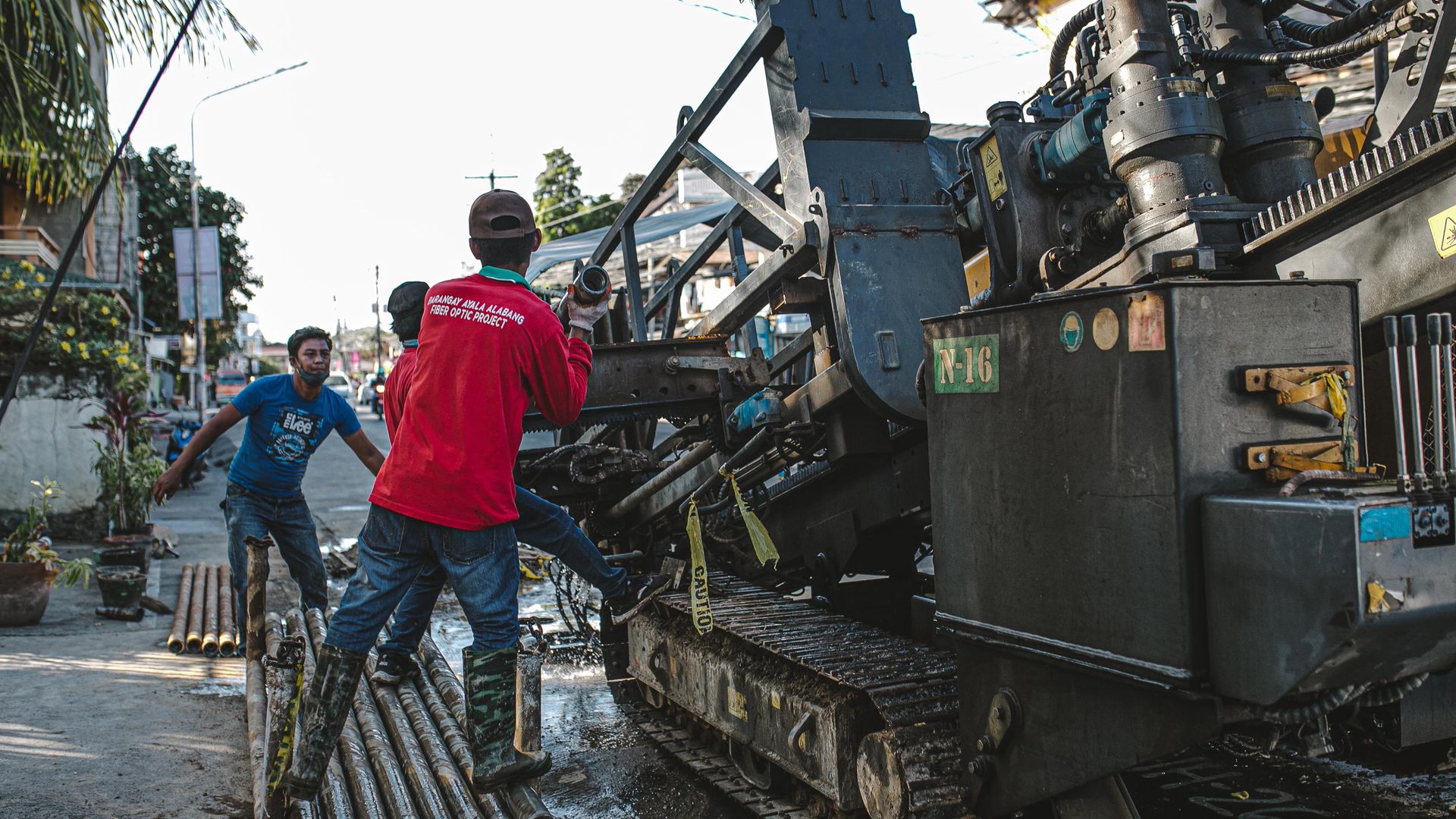
Cyprus · borehole drilling
Borehole drilling in Cyprus.Compare several quotes at once.
A borehole is the one job on this site where the client can pay in full and receive nothing usable. Drilling is charged by the metre whether water is found or not, and whether it is fit for its purpose is a separate question again. That makes the terms, rather than the rate, the thing to compare.
- Provenance on every range
- Dated, not evergreen
- Method published in full
Borehole drilling companies in Cyprus
The unusual thing about this purchase
Almost every other trade on this site delivers something visible for the money. Borehole drilling is different: the contractor supplies effort and equipment, and whether that effort produces a usable water source depends on geology nobody controls.
That has two consequences for comparing quotes.
The first is that the depth assumption drives the total, and it is an assumption. A quote built on a shallow expectation looks better than one built on a realistic depth for the area, and the difference appears when drilling passes the assumed depth and the metre rate continues.
The second is that the terms governing an unsuccessful or unsuitable outcome are worth more than the rate. Two quotes with similar rates can allocate that risk entirely differently, and the client discovers which one they signed at the worst possible moment.
The permit comes before the drill
Groundwater in Cyprus is a constrained and regulated resource. Drilling and abstraction require authorisation from the water authority, and the requirement exists because the island's aquifers are under pressure — in coastal areas, over-abstraction draws seawater inland, which degrades the resource for everybody drawing on it.
The permit position should be established before a contractor is selected, not after. Two questions settle the ground: what authorisation the intended use requires, and whether the location and the proposed abstraction are likely to receive it.
A contractor prepared to drill without that being resolved is proposing an unauthorised well. The consequence attaches to the land and to its owner rather than to the driller who has moved on, and it surfaces in the same places other unauthorised works do — at sale, at title, and when any subsequent permission is sought.
What the quote is actually made of
A borehole quote typically separates into four parts, and firms combine them differently, which is the mechanical reason totals do not line up.
Mobilisation. Getting a rig to the site. Distance and access govern it, and on a constrained or sloping plot it can be substantial.
Drilling, by the metre. The main line. What matters is the assumed depth, whether the rate changes with depth, and whether it changes with formation — drilling through hard rock is slower than through softer ground, and some quotes price the two differently.
Casing and screening, by the metre. The lining that keeps the hole open and controls where water enters. Diameter and material are specification items, and a smaller or thinner casing is a real cost difference with real consequences for the borehole's life and for what pump will fit.
Development, testing and the pump. Clearing the hole, establishing what it yields, and installing equipment sized for that yield. Since the yield is unknown at quotation, any pump price quoted early is provisional.
A quote presenting one figure for all four cannot be compared with one that itemises them, and asking for the breakdown is reasonable in every case.
The clauses that decide what happens when it goes wrong
Three, and they are the substance of the comparison.
The dry hole clause. What is charged if the borehole does not produce a usable quantity. Full metre rate, reduced rate, or a cap. This is the clause that separates quotes most meaningfully, and it is frequently absent — which in practice means the full rate applies.
The depth clause. What happens beyond the assumed depth. A rate that continues unchanged, a stepped rate, or a point at which the client decides whether to continue. The last is the most useful, because it puts an explicit decision where an open-ended cost would otherwise be.
The quality clause. Who pays for water analysis, and what follows if the water is unsuitable for the intended use. Near the coast this is not a remote scenario, and a client who intended domestic supply and received water fit only for some irrigation uses has not received what they were buying.
Ask for all three in writing before comparing totals. A firm that will not put them in writing has answered the question.
Water quality is a separate outcome from water quantity
Finding water and finding usable water are different results, and the second is not guaranteed by the first.
Salinity is the main concern in coastal areas, where over-abstraction has drawn seawater into aquifers in parts of the island. Water may also carry hardness, iron, or other characteristics that suit some uses and not others.
The practical points for a comparison:
Analysis should be specified — who takes the sample, what is tested for, and against which standard for the intended use.
The intended use should be stated in the contract. Irrigation of tolerant crops, garden use, livestock and treated domestic supply set different thresholds, and a borehole adequate for one may not serve another.
Where treatment might be required, its cost belongs in the project budget as a contingency rather than as a surprise. Treatment for salinity in particular is a substantial ongoing cost rather than a one-off fitting.
What an assessment before drilling changes
A hydrogeological assessment reads the local geology and the record of existing wells nearby to estimate the likely depth, the likely yield and the likely quality.
It cannot promise water. What it does is replace the drilling contractor's assumption with an informed one, and since the assumed depth is the largest variable in the total, that changes the quality of every quote received afterwards.
It also informs the permit conversation and, where the assessment is discouraging, it can prevent the expenditure entirely — which is the outcome with the best return of any described on this page.
For a client comparing quotes without an assessment, the useful question to each contractor is what depth they have assumed and what that assumption is based on. Answers grounded in nearby wells are worth more than answers grounded in a regional average.
Yield, and the number that is easy to overstate
A borehole that produces water still has to produce enough of it, at a rate the intended use requires, and sustainably.
Those are three separate things. A hole can deliver an impressive flow for an hour and much less over a day. It can deliver adequately in March and poorly in August, which is precisely when an irrigated holding needs it. And it can deliver well in its first year and decline as the aquifer around it responds to being drawn on, particularly where neighbouring abstraction is also increasing.
Test pumping is what distinguishes an initial flow from a sustainable yield. A short test establishes that water is present; a longer one, run at a defined rate with the recovery measured afterwards, establishes what the borehole will actually give. The two cost different amounts and produce different confidence, and a quote should say which is included.
For comparison purposes the question to each firm is what test is proposed, for how long, and what is recorded. A yield figure quoted without saying how it was established is a number without a method behind it, and it is the number a pump will be sized against.
Ongoing obligations after the hole is finished
A borehole is not a completed purchase in the way a roof is. It carries duties that continue.
Abstraction is authorised in terms that may include how much may be taken and for what purpose, and those terms have to be observed rather than filed. Metering may be required. Records may need keeping.
Maintenance is real. Pumps fail, screens clog, and yields change. A borehole that has been neglected for years is frequently recoverable, but the recovery is its own project, and factoring an occasional service into the running cost is cheaper than discovering the position during a dry summer.
Where a property with an existing borehole is being bought, the questions mirror these: what authorisation exists, on what terms, whether it transfers, when the hole was last tested, and what the yield and quality were when it was. An unauthorised or undocumented borehole on a property being purchased is a liability being acquired along with the land.
Making the comparison possible
Establish the permit position first, and share it with every firm.
Commission or obtain a hydrogeological view where the expenditure justifies it, and give every firm the same assumed depth to price against.
Require the four elements itemised: mobilisation, drilling by the metre with any formation or depth variations, casing and screening with diameter and material, and development and testing.
Require the three clauses in writing: dry hole, beyond assumed depth, and water quality against a stated intended use.
Treat the pump as provisional and price it after the yield is known.
Ask what happens to the arisings and to the site on completion, since a drilling operation leaves a working area behind it.
Quotes assembled that way differ on price and terms that can be weighed against each other. Quotes assembled from a phone call differ on how much risk each firm has quietly left with the client.
Common questions
- Is a permit needed to drill a borehole in Cyprus?
- Yes. Drilling and abstracting groundwater are regulated activities, and authorisation from the water authority is required before work begins. Water is a constrained resource on the island and the framework exists because of that. A contractor willing to drill without establishing the permit position is offering an unauthorised well, which is a liability attaching to the land rather than to them.
- How is drilling priced?
- Predominantly by the metre drilled, with casing usually charged separately by the metre and the pump and installation quoted as their own item. Because depth is unknown until drilling reaches water, a quote is an estimate built on an assumed depth, and the assumption is the number that matters most.
- Who carries the risk if no water is found?
- Whatever the contract says, and it varies. Some quotes charge the full metre rate for a dry hole; some apply a reduced rate; a few carry a cap. That clause is worth more than a difference in the headline rate, and it is the first thing to compare between quotes.
- Can a borehole produce water that is unusable?
- Yes, and near the coast it is a real possibility. Salinity, hardness and other characteristics determine whether water suits irrigation, livestock or any treated domestic use, and none of them is known until the hole is producing. A quote should say who pays for analysis and what happens if the water does not meet the intended use.
- What does a hydrogeological assessment add?
- It converts a guess about depth and likelihood into an informed estimate, using the geology and the record of nearby wells. It cannot promise water. It can substantially change the assumed depth a quote is built on, which is the single largest variable in the total.
- Is the pump part of the drilling quote?
- Sometimes, and the inconsistency makes totals incomparable. Pump selection depends on the depth and the yield, both of which are unknown when the quote is written, so a fixed pump price in an early quote is a placeholder rather than a commitment.
01Reading the numbers
A borehole drilling priceis only as good as its source.
Every range on this page says where it came from and when. This is how to use them.
Check what it is
A range built on forty recorded quotes carries more weight than a level compiled from two published guides. Every range says which of the two it is.
Basis shown
Check the date
Prices move. A figure gathered in January says little about August, so each carries the month it was recorded or compiled.
Dated
Compare the same unit
Per square metre, per room and per job are different measurements. Convert before comparing, not after.
Same unit
Treat outliers as questions
A quote far outside the published range is not automatically wrong — but the difference should have an explanation you can check.
Ask why

Need borehole drilling?One form. Up to five quotes.
Send us the job and we will gather quotes against the same written scope, so the numbers are comparable.